
Quick Summary: A fender bender can affect more than the bumper or body panels. An impact near a wheel can damage suspension or steering components, change wheel alignment, and affect how the vehicle handles. Pulling, vibration, uneven tire wear, or unusual noises after a collision are signs worth having inspected.
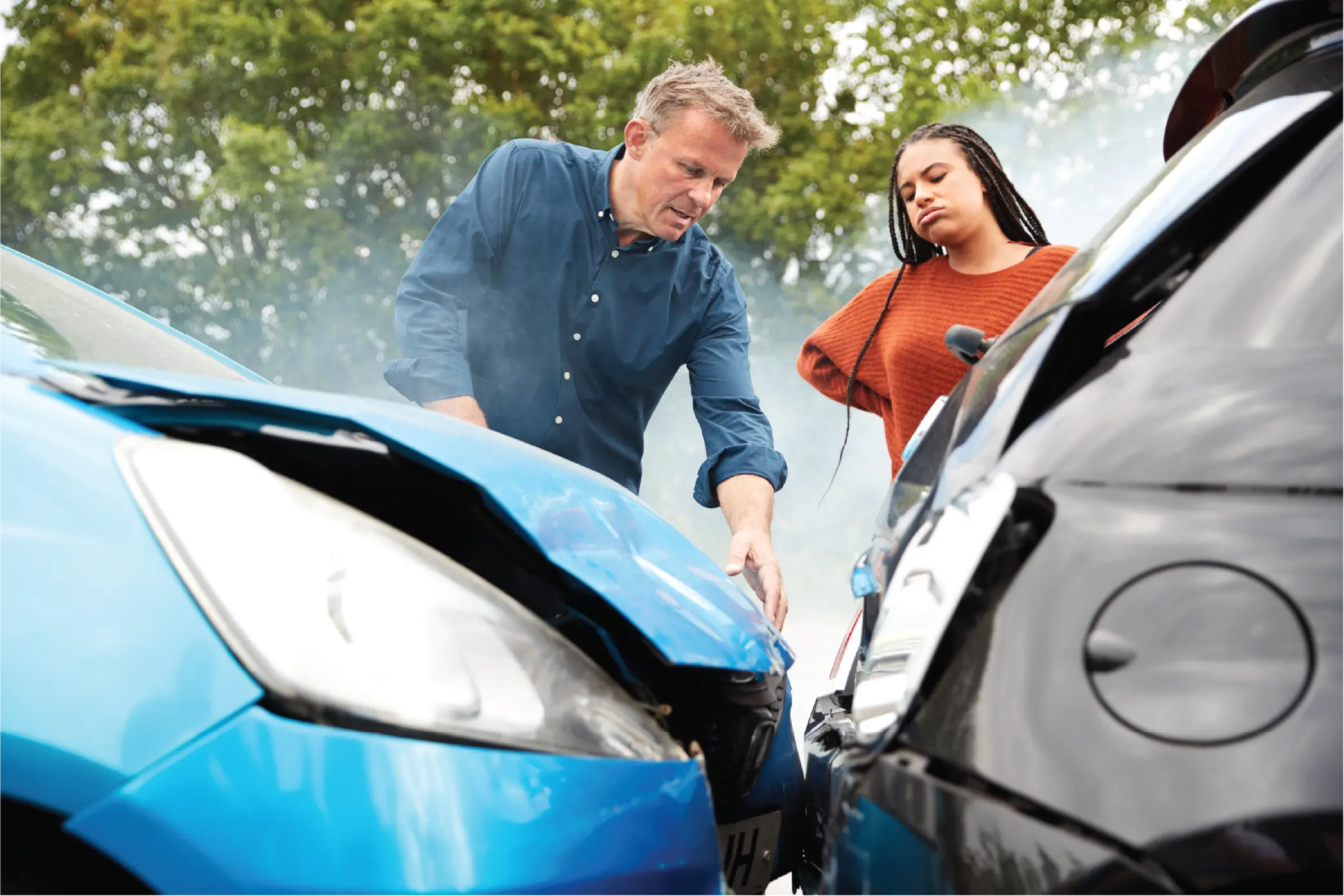
A fender bender may leave behind little more than a dented bumper or scratched body panel. But the force from even a relatively minor collision can sometimes reach the wheels, steering, suspension, or alignment components.
That is especially true when a vehicle is hit near a wheel, pushed sideways, or forced into a curb.
Because of that, suspension damage after a fender bender may not always be obvious during a quick visual inspection. Your car may still be drivable while handling differently, pulling to one side, or developing uneven tire wear.
If your vehicle feels different after a collision, there may be damage beyond what you can see on the exterior.
Can a Fender Bender Cause Suspension Damage?
Yes, depending on where and how the vehicle was hit.
Your suspension system includes components that help support the vehicle, control wheel movement, and maintain proper contact between the tires and the road. These parts sit close to common collision areas, especially around the front and rear corners of the vehicle.
A relatively small impact can sometimes affect components such as:
- Control arms
- Tie rods
- Struts or shocks
- Ball joints
- Steering knuckles
- Wheel bearings
- Springs
- Subframes
- Suspension mounting points
The likelihood of suspension damage after a fender bender may increase when a wheel or tire takes a direct hit.
For example, if another vehicle strikes the front corner of your car, the bumper and fender may absorb some of the impact. The wheel, steering, and suspension components behind them may also be affected.
Can a Minor Accident Knock Your Car Out of Alignment?
It can. Wheel alignment refers to the angles at which your wheels are positioned relative to the vehicle and the road. Those angles are set to manufacturer specifications so the vehicle can track properly and the tires can wear evenly.
A collision can alter those angles if the impact affects a wheel, tire, steering component, suspension part, or mounting point.
Common situations that may affect alignment include:
- A wheel being struck directly
- A corner of the vehicle taking the impact
- The vehicle being pushed into a curb
- A sudden sideways movement during the collision
- Damage to steering or suspension components
- Movement at suspension mounting points
The vehicle does not need to look severely damaged for alignment to change.
What Are the Signs Your Alignment May Be Off?
Some alignment problems become noticeable shortly after the accident.
Watch for symptoms such as:
- The vehicle pulls to the left or right
- The steering wheel sits off-center while driving straight
- The vehicle does not track straight
- Steering feels different than it did before the collision
- The car feels less stable at higher speeds
- Tires begin wearing unevenly
- Tires squeal during turns
- The steering wheel vibrates
One symptom does not automatically mean the vehicle has an alignment problem. Tire damage, wheel damage, suspension problems, or steering issues can create similar symptoms.
An inspection can help determine what is actually causing the change.
What Are the Signs of Suspension Damage After a Fender Bender?
Suspension problems can show up in several ways.
You may notice:
- Clunking or knocking noises
- Rattling over bumps
- Excessive bouncing
- A rougher ride than before the collision
- Loose or unusually stiff steering
- Vibration through the steering wheel
- The vehicle leaning to one side
- One wheel appearing positioned differently
- Tire rubbing
- Reduced stability while turning or braking
Some problems may only appear at certain speeds or when driving over uneven pavement.
If your vehicle suddenly drives or sounds different after an accident, mention those changes when you bring it in for inspection.
Why Suspension Damage May Not Be Obvious
Collision damage is not always visible from outside the vehicle.
A bumper cover or fender may have only cosmetic damage while parts behind it have shifted, bent, or loosened.
Some suspension components also sit underneath the vehicle, where you cannot easily see them during a normal walkaround.
A technician may need to inspect the vehicle on a lift, remove damaged exterior components, take measurements, or perform an alignment check to identify the problem.
This is one reason an exterior inspection alone may not tell you whether the vehicle’s steering and suspension are still within specification.
Can You Have Bad Alignment Without Damaged Suspension Parts?
Yes. A vehicle can be out of alignment even if no suspension component needs to be replaced.
The force of an impact may change wheel alignment without causing obvious physical damage to a control arm, strut, or tie rod.
On the other hand, an alignment problem may also be a symptom of a bent or damaged component.
That is why simply performing an alignment without first checking for collision damage is not always the right approach.
If a suspension or steering part is damaged, that component may need to be repaired or replaced before the vehicle can be properly aligned.
Can Driving With Bad Alignment Cause More Problems?
It can. Improper alignment can cause tires to wear unevenly or more quickly than they normally would.
You may notice excessive wear along the inside or outside edge of a tire, for example.
Alignment problems can also affect:
- Steering feel
- Vehicle stability
- Tire life
- Handling
- How the vehicle tracks on the road
If the alignment problem is being caused by a damaged suspension or steering component, continuing to drive also leaves the underlying collision damage unaddressed.
Not every small pull or vibration means something major is wrong. But a noticeable change after an accident is worth checking.
How Does a Collision Repair Shop Check Suspension and Alignment?
A proper inspection looks at more than whether the wheels appear straight. Depending on the accident and the vehicle, the repair process may include several steps.
Inspecting the Wheels and Tires
Technicians may first look for visible damage to the wheels and tires, including bends, cracks, sidewall damage, or changes in wheel position.
Inspecting Steering and Suspension Components
The steering and suspension system may be checked for:
- Bent components
- Loose parts
- Damaged bushings
- Broken mounting points
- Damaged tie rods
- Wheel bearing issues
- Impact damage around the wheel assembly
Measuring Wheel Alignment
Alignment equipment can measure wheel angles and compare them with manufacturer specifications.
If the measurements are outside specification, technicians can determine whether adjustment alone is appropriate or whether damaged parts need to be repaired first.
Checking Structural or Mounting Points
Some collisions affect the areas where suspension components attach to the vehicle.
If those mounting points have moved, additional measurements or repairs may be required before the final alignment is completed.
Road Testing the Vehicle
A road test may help verify steering feel, tracking, vibration, and other handling characteristics after repairs.
Does Every Fender Bender Require an Alignment?
No. An alignment is not automatically required after every small accident.
Whether one is needed depends on factors such as:
- Where the vehicle was hit
- The direction of the impact
- Whether a wheel or tire took the impact
- Whether steering behavior changed
- Whether suspension components were damaged
- Whether the vehicle was pushed into a curb
- The manufacturer’s repair procedures
If the collision was limited to a minor scrape on a bumper corner and the wheel, steering, and suspension were unaffected, an alignment may not be necessary.
If the impact involved a wheel or the vehicle begins pulling, vibrating, or tracking differently, alignment measurements may be appropriate.
Can Suspension or Alignment Problems Affect ADAS?
On some vehicles, yes. Modern driver-assistance systems may rely on cameras, radar, steering angle data, wheel-speed information, and other vehicle measurements.
Correct vehicle geometry can be part of that equation.
Depending on the vehicle and repair, proper wheel alignment may be required before certain ADAS calibration procedures can be completed.
For example, a forward-facing camera or radar system may need to be calibrated after specific repairs. If the vehicle itself is not sitting or tracking correctly, that may affect how the calibration procedure is performed.
The exact requirements vary by manufacturer, model, equipment, and repair.
That is why collision repairs involving suspension, steering, alignment, or ADAS components should follow the applicable manufacturer procedures.
Does Insurance Cover Suspension or Alignment Damage After an Accident?
Coverage depends on your policy, the circumstances of the accident, and the claim.
If suspension, steering, wheel, or alignment damage resulted from a covered collision, the related inspection and repairs may be included as part of the claim.
Some damage may not be identified until the repair facility inspects the vehicle more closely or begins disassembly.
For example, the initial estimate may show bumper and fender damage. Once the damaged parts are removed, technicians may find a bent suspension component or damaged mounting point.
Network Auto Body’s repair facility can document those findings and communicate with the insurance company as needed.
Have Your Vehicle Inspected After a Fender Bender
Visible body damage does not always show how an impact affected the wheels, steering, suspension, or alignment.
If your vehicle begins pulling, vibrating, making unusual noises, or handling differently after a collision, those changes should be inspected.
Network Auto Body can evaluate collision damage, inspect the affected areas, follow manufacturer repair procedures, and determine whether suspension repairs, alignment work, diagnostic scanning, or ADAS calibration may be required.
Make Sure Your Vehicle Drives the Way It Should
Network Auto Body can inspect collision damage, identify suspension or alignment issues, and help coordinate repairs with your insurance claim.