
Quick Summary
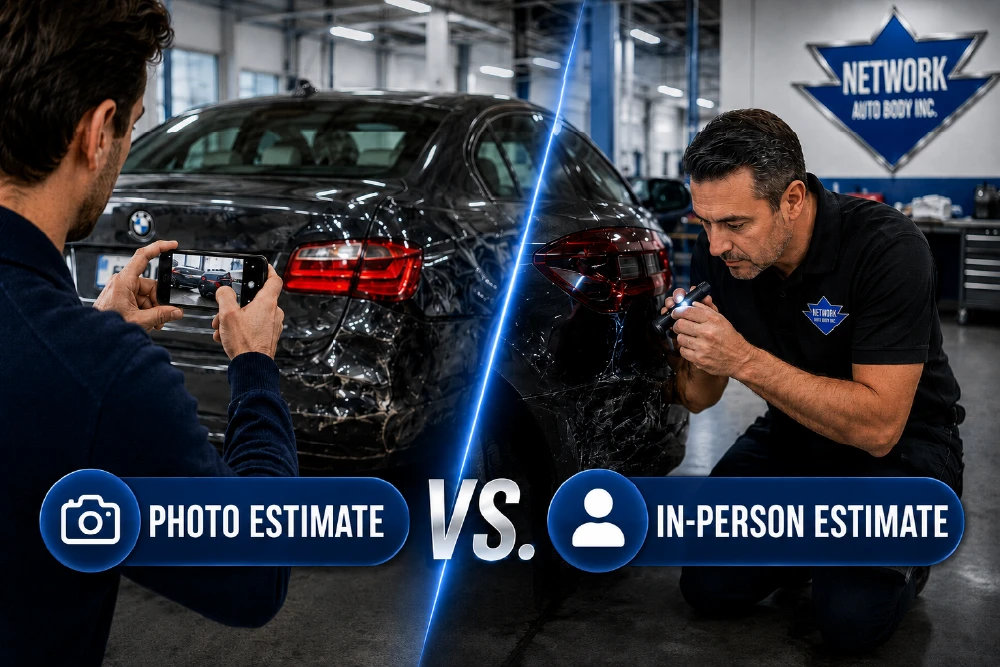
A photo estimate is useful when you want a fast starting point after an accident. It can help an auto body shop review visible damage, understand the general repair area, and begin the estimated conversation from home or work.
An in-person estimate provides a clearer view of the vehicle, helping the estimator assess panel gaps, related parts, damage, and any signs of damage beyond the visible area.
For many Los Angeles drivers, the best choice depends on the damage. If the damage is minor, visible, and simple, a photo estimate may be enough to start. If the impact involves bumpers, sensors, structural areas, warning lights, alignment changes, or possible damage beyond the surface, an in-person inspection is the better path.
Network Auto Body’s online estimate page is ideal for a quick estimate and provides an approximate repair cost. A closer examination and disassembly can then reveal the complete extent of the damage.
1. Photo Estimate vs. In-Person Estimate: The Short Answer
An in-person estimate provides a more complete view of the vehicle, allowing the estimator to inspect related parts and assess the damage from multiple angles.
A photo estimate is also useful. It can help you start the repair process quickly, especially if the vehicle is drivable, the damage is easy to see, or you want a general idea before scheduling a visit.
A photo estimate is best for convenience. An in-person estimate is best for accuracy.
Each option serves a different purpose, and the right choice depends on your needs.
A photo estimate helps answer: What does the visible damage look like, and what might the repair involve?
An in-person estimate helps answer: What does the vehicle actually need after a trained estimator inspects the damage directly?
That difference matters because collision damage is often layered. Other parts may be damaged too. A bumper cover may hide reinforcement damage. A scraped panel may need blending into adjacent panels. A damaged light may have broken mounting tabs behind it. A minor-looking impact may affect sensors, wiring, clips, brackets, or alignment.
Our Estimate Process page explains that visible damage is entered into the estimating system first. The shop also looks beyond exterior damage because disassembly and structural exposure can reveal additional repair needs.
For that reason, a photo estimate is a helpful first step in creating the final repair plan.
2. What a Photo Estimate Can Do Well
A photo estimate can be a smart first step after an accident. It saves time, helps the repair shop understand the situation, and gives the customer a way to begin the process from home or work.
This is especially helpful when the vehicle is still drivable and the damage appears straightforward.
For example, a photo estimate may be useful when:
- The damage is mostly cosmetic and easy to see
- The bumper, fender, door, or panel damage is clearly visible
- The vehicle still drives normally
- The dashboard remains clear of new warning lights
- Doors, hood, trunk, or liftgate open and close normally
- The alignment and steering feel normal
- The customer wants to start the estimate process quickly
- The customer needs guidance before deciding whether to schedule an appointment
The advantage is convenience. You can take photos, submit basic vehicle details, and let the shop begin reviewing the visible damage.
For busy drivers in Los Angeles, a photo estimate makes it easier to begin the repair process while planning around work, transportation, and an in-person visit.
A Photo Estimate Helps the Shop See the Visible Story
Good photos can show:
- Where the vehicle was hit
- How large the visible damage is
- Whether paint is scraped, cracked, or chipped
- Whether a panel appears dented or creased
- Whether a bumper cover is cracked or displaced
- Whether lights, mirrors, or trim pieces look damaged
- Whether the repair may benefit from a closer inspection
A photo estimate can also help the shop decide whether the next step should be an in-person inspection, online estimate follow-up, or appointment.
Network Auto Body’s online estimate page explains this clearly: the online tool is convenient, provides an approximate idea of the repairs needed, and serves as a first step toward the final insurance estimate.
A Photo Estimate Is Especially Useful for Triage
Think of a photo estimate as triage. It helps sort the situation and start the process.
The shop may look at your photos and say:
- This appears minor enough to begin with an online estimate.
- This looks like it will benefit from an in-person inspection.
- This damage is near sensors or structural areas.
- Disassembly can help confirm the full repair scope.
- This may involve insurance documentation or supplement review later.
That early guidance can be valuable. It helps you understand whether the damage is likely simple or whether the vehicle will benefit from a closer look.
A photo estimate works best when its purpose is clear. It provides a helpful starting point for building a complete repair plan.
3. When an In-Person Inspection Adds More Accuracy
Photo estimates are most accurate when the damage is clearly visible from the outside.
This is the key difference between the two methods.
A photo shows the vehicle’s outer surface, while an in-person inspection provides a closer look behind the bumper, under trim, inside the door, around the headlights and sensors, and near structural attachment points.
That is why photo estimates can change later. The first review may be reasonable based on the pictures, and the repair scope may become more detailed once the estimator sees the vehicle in person or once damaged parts are removed.
An In-Person Inspection Can Reveal Additional Damage
Damage behind exterior parts is one of the biggest reasons an in-person estimate may provide greater accuracy.
Examples include:
- Bent bumper reinforcement behind a bumper cover
- Broken clips, brackets, or retainers
- Cracked headlight or taillight mounting tabs
- Damage behind wheel liners or splash shields
- Wiring repair needs near the impact area
- Sensor or radar mounting damage
- Inner panel damage
- Structural or unibody movement
- Paint blending needs on adjacent panels
Multiple Angles Show Depth and Shape
Vehicle damage is three-dimensional. Multiple angles help show its depth and shape.
A dent may look smaller from one angle and larger from another. A panel crease may become clearer under better lighting. A reflection can reveal paint distortion. A bumper may look aligned in one photo and show uneven gaps from another view.
Estimators often need to move around the vehicle, look across the panel surface, check reflections, compare gaps, and inspect how nearby parts line up. Photos support the review, while an in-person inspection provides a more complete assessment.
An In-Person Inspection Can Confirm Function
A vehicle may look acceptable in photos and still have functional changes.
- A door may close differently
- A hood may sit unevenly
- A trunk or liftgate may latch differently
- A headlight may feel loose
- A bumper may be shifted on one side
- A warning light may appear after the impact
- Parking sensors may respond differently
- The vehicle may pull, vibrate, or feel different while driving
These changes often benefit from an in-person inspection. Some may also require scanning, measuring, or additional repair planning.
An In-Person Inspection Can Review Safety Systems
Modern vehicles often include cameras, radar, sensors, wiring, and advanced driver assistance features around common impact areas. If the damage is near the bumper, grille, windshield area, mirror, rear quarter area, or lamps, the repair plan may include a closer review of these systems.
Because Network Auto Body’s model is dealer-driven and manufacturer-aligned, this should be framed carefully: modern repairs may require a closer look at manufacturer procedures, sensor placement, and repair documentation. Because Network Auto Body is fully equipped to handle all vehicle segments—covering foreign and domestic manufacturers—the team can apply factory-aligned inspection methods to identify mechanical, electronic, or structural repair needs beyond the visible area, regardless of the vehicle’s make or country of origin. Photos provide a useful starting point, while a complete inspection confirms whether calibration, advanced diagnostics, or other repairs are needed.
4. What an In-Person Estimate Can Reveal
An in-person estimate gives the repair team a fuller view of the vehicle. The estimator can walk around the vehicle, look at damage from different angles, check how panels line up, open and close affected parts, look for related signs, and decide whether deeper inspection may be needed.
An in-person estimate can confirm that the visible area covers the full repair scope. It also gives the estimator a better chance to identify signs of related damage.
For collision repair, that difference matters.
A vehicle is a connected structure with panels, fasteners, sensors, brackets, wiring, reinforcements, paint layers, trim, and mechanical systems. Damage in one area can affect another area nearby.
An in-person inspection helps the estimator look for those connections.
Panel Gaps and Alignment Clues
One of the first things an estimator may check is how the damaged area lines up with the rest of the vehicle.
A photo may show a dent. In person, the estimator may also notice:
- Uneven gaps between the bumper and fender
- A hood that sits slightly higher on one side
- A door that rubs or closes differently
- A trunk lid that is shifted after a rear-end impact
- A headlight or taillight that sits unevenly
- A bumper cover that is pulled away from the body
These details can suggest that the damage extends beyond the surface panel.
Lighting, Reflection, and Surface Shape
Paint and body damage can change depending on lighting and angle. A dent that looks minor in a phone photo may show a deeper crease when viewed across the panel in person. Scratches may look different under shop lighting. A panel may show waves, distortion, or prior repair signs that become clearer during a direct inspection.
This is especially important for paint and refinish planning. If the repair may require blending into nearby panels, the estimator needs to understand color, finish, damage shape, panel condition, and repair access.
Function Checks
An in-person inspection shows how a damaged part behaves.
An in-person inspection allows the estimator to check whether:
- A door opens and closes normally
- A hood or trunk latches correctly
- A bumper is loose
- A mirror is secure
- A headlight or taillight is properly mounted
- A wheel liner is rubbing
- A warning light is present
- A parking sensor or camera area appears affected
These details can change the repair plan. A vehicle can look manageable in photos and still benefit from additional inspection because a part is loose, shifted, or functioning differently.
Clues to Additional Damage
An in-person estimate may also reveal signs that teardown or additional inspection will be needed.
For example, if a rear bumper is pushed in unevenly, the estimator may suspect damage behind the cover. If the trunk floor trim looks displaced, there may be rear body damage underneath. If the front bumper impact is near radar or sensors, the repair plan may need to account for electronics or calibration-related review.
An in-person estimate provides a strong foundation, and disassembly can add the remaining repair details.
For Network Auto Body customers in Los Angeles, this is why the estimate process should be treated as a repair-planning step as well as a price request. The goal is to understand what the vehicle needs and produce an accurate repair plan.
5. Photo Estimate vs. In-Person Estimate: Side-by-Side Comparison
A photo estimate and an in-person estimate can both be useful. The better choice depends on the vehicle, the damage, the customer’s timeline, and how much accuracy is needed at the beginning.
| Comparison Point | Photo Estimate | In-Person Estimate |
| Best for | Starting the process quickly | Confirming a more accurate repair scope |
| Convenience | High — can begin from home or work | Provides a direct shop inspection |
| Accuracy | Useful for visible damage | Usually more accurate because the vehicle is inspected directly |
| Damage beyond the surface | Shows visible signs | Offers a better chance of identifying related clues |
| Sensors / electronics | Shows the location | Allows closer review of affected areas and function |
| Paint / refinish planning | Provides an early view based on photo quality and lighting | Stronger because the estimator can view color, angle, surface, and adjacent panels |
| Insurance documentation | May help begin documentation | Often stronger for detailed repair planning |
| Timeline planning | Good for early guidance | Better for setting repair expectations |
| Final repair scope | Provides a preliminary starting point | Starts from stronger information and may develop after teardown |
The key difference is how much information the shop can confirm.
A photo estimate can be a good starting point when the damage is visible and uncomplicated. An in-person estimate is usually the stronger option when the damage may involve related parts, structure, sensors, paint blending, or repair-plan documentation.
The Most Accurate Estimate May Come After Teardown
An in-person estimate can become more detailed after the repair begins. Some damage becomes visible as parts are removed.
This is a normal part of collision repair. An estimate can become more accurate in stages:
- Photo estimate: visible damage from submitted images
- In-person estimate: direct inspection of visible damage and related clues
- Teardown or disassembly: deeper inspection behind panels, bumpers, trim, and components
- Supplement or updated estimate: documentation of newly discovered repair needs
- Final repair record: completed approved repair scope
An honest estimate process clearly explains what is known now, what may benefit from closer inspection, and what could change later.
6. When a Photo Estimate Is Enough to Start
A photo estimate can be enough to start when the damage is visible, simple, and shows signs of a surface-level repair.
That wording matters: enough to start means the first step toward finalizing the repair plan.
A photo estimate is often a good first step when:
- The damage is mostly cosmetic
- The affected area is easy to photograph
- The vehicle is drivable
- The dashboard remains clear of new warning lights
- The impact was light
- Doors, hood, trunk, or liftgate still work normally
- The affected area is clear of sensors, cameras, radar, or structural areas
- The customer needs quick guidance before scheduling
For example, if a vehicle has a visible scrape on a bumper cover, a small dent on a door skin, or clear paint transfer on a panel, photos may help the shop begin the estimate conversation.
A photo estimate can also be helpful when a customer wants to know whether the next step should be an appointment, a closer inspection, or a repair-planning conversation.
Photo Estimates Work Best With Clear Expectations
The best photo estimate experience happens when the customer understands that the estimate is an early step in the process.
A shop can review the photos and provide guidance based on what is visible. If additional damage appears later, the estimate can be updated to reflect the new information.
This staged process allows each estimate to become more complete as the repair team gains access to the vehicle.
An in-person inspection can look behind a bumper cover, test a parking sensor, measure unibody movement, confirm brackets behind a headlight, and review paint texture, panel distortion, and subtle alignment changes.
That is why a photo estimate should be framed as the beginning of the estimate process and a useful part of the complete repair process.
Best Uses for a Photo Estimate
A photo estimate can be especially helpful for:
- Starting the conversation quickly
- Giving the shop basic vehicle and damage information
- Helping the customer understand likely next steps
- Letting the shop decide whether in-person inspection is needed
- Supporting early insurance or repair documentation
- Reducing friction for busy Los Angeles-area drivers
For Network Auto Body customers, this makes the online estimate option useful. It gives drivers in Los Angeles a convenient way to begin before scheduling an in-person visit.
The goal is to use the right estimate method at the right stage, bringing convenience and accuracy together.
7. When You Should Schedule an In-Person Inspection
A photo estimate is convenient, and some situations benefit from an in-person inspection from the beginning.
If the damage may involve related parts, safety systems, structural areas, or functional changes, direct inspection helps the shop understand the repair scope. A closer inspection can help identify signs that add useful detail to the photos.
You should strongly consider an in-person estimate if any of the following apply.
The Damage Is Near Sensors, Cameras, or Radar Areas
Modern vehicles often have sensors and cameras built into bumpers, grilles, mirrors, windshields, rear body areas, and side panels. A photo may show a cracked bumper cover, while an in-person inspection can also review the sensor bracket, wiring harness, radar mount, or camera-related area.
If the impact happened near these systems, an in-person inspection gives the repair team a better chance to evaluate what needs closer review.
This is especially important for newer vehicles. Network Auto Body’s dealer-driven and manufacturer-aligned repair approach matters because modern repairs may require attention to manufacturer procedures, sensor placement, diagnostics, and repair documentation.
The Bumper Is Cracked, Pushed In, or Sitting Unevenly
Bumper damage can extend beyond the outer cover. The cover may flex back after impact, while reinforcement, absorbers, brackets, or mounting points behind it may also need attention.
Schedule an in-person inspection if:
- The bumper is loose
- One side sits lower than the other
- There are uneven gaps around the bumper
- The bumper cover is cracked or buckled
- Parking sensors respond differently
- The impact felt stronger than the visible damage suggests
A photo can show the outer cover. An in-person inspection can confirm the condition of parts behind it.
Doors, Hood, Trunk, or Liftgate Work Differently
If a door, hood, trunk, or liftgate opens or closes differently than it did before the accident, the issue benefits from direct inspection.
This can point to panel movement, hinge damage, latch problems, structural shifting, or inner-panel damage. A photo may show alignment from one angle, while an in-person inspection can also show how the part functions.
In-person evaluation matters here because function is part of the repair plan.
The Vehicle Feels Different While Driving
If the vehicle pulls, vibrates, makes new noises, feels unstable, or has steering changes after the accident, an in-person inspection is the best estimate path.
Those symptoms may involve suspension, alignment, wheel, tire, structural, or mechanical repair needs. Even if the exterior damage looks small, the way the vehicle drives is important information.
An in-person inspection allows the repair team to evaluate how the vehicle feels on the road.
There Are Dashboard Warning Lights
A warning light after a collision provides important information for the repair team. The team may inspect or scan the vehicle.
This can affect the repair plan, especially if the warning is related to safety systems, sensors, airbags, parking assistance, blind spot systems, or other electronics.
The Accident Involved More Than Surface Damage
An in-person inspection is usually better if the vehicle experienced a forceful impact, was pushed into another object, was involved in a rear-end collision, or was struck near a structural area.
Even if photos look manageable, a closer inspection gives the shop a stronger starting point and can identify deeper repair needs.
For Los Angeles drivers, the decision is simple: use a photo estimate when the damage appears visible and straightforward, and schedule an in-person inspection when the repair involves function, related parts, or damage beyond the surface.
8. How to Take Better Photos for an Online Estimate
If you choose a photo estimate, the quality of your photos matters. Clear photos help the shop understand the damage better and give you more useful guidance.
Higher-quality photos give the estimator a clearer view and help the shop provide stronger early guidance.
Here is how to take better photos for an online auto body estimate.
Start With Full-Vehicle Photos
Take photos of the entire vehicle before close-up damage shots. This helps the estimator understand where the damage is located.
Include:
- Front view
- Rear view
- Driver-side view
- Passenger-side view
- Three-quarter angle from the damaged side
- A wider shot showing the damaged area in context
This gives the estimator useful context and shows how the damaged part relates to nearby panels.
Take Clear Close-Ups of the Damage
After the full-vehicle shots, take closer photos of the damaged area.
Try to show:
- Scratches
- Dents
- Cracks
- Paint transfer
- Broken parts
- Panel gaps
- Damaged lights
- Loose trim
- Bumper separation
- Any part that looks shifted or misaligned
Use steady lighting and clear focus. If possible, take photos outdoors in even daylight or inside a well-lit area.
Capture Multiple Angles
Damage can look different depending on angle. A dent may appear subtle from one direction and become obvious from another.
Take photos from:
- Straight on
- Left angle
- Right angle
- Slightly above
- Slightly below
- Across the panel surface
This is especially helpful for dents, creases, paint distortion, and panel alignment changes.
Include the VIN and Vehicle Details If Requested
The shop may need vehicle information to understand parts, trim, and repair requirements. Follow the estimate tool instructions if it asks for details such as year, make, model, trim, VIN, or contact information.
Submit sensitive personal documents and vehicle information through the shop’s secure estimate or contact process.
Photograph Warning Lights or Related Changes
If a warning light appears after the accident, take a clear photo of the dashboard. If a door, trunk, hood, or liftgate closes differently, take a photo or add a short note describing the issue.
Also mention if:
- The vehicle pulls while driving
- A sensor responds differently
- A light is loose
- A bumper is hanging
- A tire rubs
- You hear new noises
- The vehicle feels different while driving
These details help the shop decide whether the damage can be reviewed online or whether the vehicle will benefit from an in-person inspection.
9. Why Estimates Can Still Change After Inspection or Teardown
Even with clear photos and an in-person estimate, a collision repair estimate can continue to develop later. This often means the repair team found new information.
Collision damage is layered. Some parts are visible, while others sit behind panels, trim, bumpers, lights, liners, or interior pieces. Opening the damaged area allows the shop to confirm the full repair scope.
This is why estimates can change after teardown.
A Photo Estimate May Become an In-Person Estimate
The first stage may start online. The shop reviews your photos and gives early guidance based on visible damage.
If the photos show possible damage beyond the surface, sensor involvement, panel alignment changes, or impact near a structural area, the shop may recommend an in-person inspection.
This means the photos served their purpose: they helped identify that the vehicle would benefit from a closer look.
An In-Person Estimate May Become a Teardown Estimate
During an in-person inspection, the estimator can see the vehicle directly. A bumper cover, trim panel, headlight, or interior liner may then be removed to confirm damage behind it.
Once disassembly begins, the shop may discover:
- Broken brackets
- Bent reinforcement
- Damaged wiring
- Sensor mounting repair needs
- Structural damage behind exterior parts
- Additional paint or blending needs
- Parts that become visible during the deeper inspection
When that happens, the repair plan may need a supplement or updated estimate.
A Revised Estimate Can Protect the Repair Quality
An estimate update supports the quality of the finished repair.
A revised estimate helps the shop create proper panel gaps, position lights correctly, mount sensors securely, match paint and refinish work to the repair method, and document structural or unibody-related work accurately.
A revised estimate helps the repair plan reflect what the vehicle actually needs.
That is especially important for qualifying repairs backed by Network Auto Body’s Lifetime Warranty. The live warranty page states that Network Auto Body covers workmanship-related unibody, body, and refinish work for as long as the customer owns the vehicle, subject to the stated terms and coverage details.
The Goal Is Transparency and Clarity
The best repair process explains what is known, what a closer inspection can confirm, and how the plan may develop after disassembly.
For customers, this honesty provides clear expectations from the beginning.
A photo estimate can start the conversation. An in-person estimate can sharpen the repair plan. Teardown can complete the picture. A supplement can document what changed.
Together, these steps help create a clearer repair path.
10. Choosing the Right Estimate Path
The right estimate method depends on your vehicle, your damage, and how much accuracy is needed right away.
A photo estimate is a good starting point when the damage is visible, simple, and easy to photograph. It is convenient, fast, and helpful for beginning the repair process.
An in-person estimate is usually the better choice when the damage may involve related parts, structural areas, sensors, warning lights, fitment changes, paint blending, or insurance documentation.
| Choose a Photo Estimate If… | Choose an In-Person Estimate If… |
| Damage is clearly visible | Damage is near sensors, cameras, or radar |
| Vehicle drives normally | Vehicle feels different while driving |
| The dashboard remains clear of new warning lights | Dashboard warning lights appeared after the accident |
| Damage appears mostly cosmetic | Bumper, hood, trunk, or doors align or close differently |
| You need a quick starting point | You need a more accurate repair plan |
| You want to begin from home or work | The impact may involve related or structural parts |
Conclusion: Use Photo Estimates for Convenience, In-Person Estimates for Accuracy
Photo estimates and in-person estimates both have a place in the collision repair process.
A photo estimate is helpful when you need a fast starting point. It can show visible damage, begin the repair conversation, and help the shop recommend next steps.
An in-person estimate is usually more accurate because the estimator can inspect the vehicle directly, check alignment, review function, examine related parts, and identify clues beyond the photo view.
The estimate is an important part of the repair process and provides more than a quick price check. Visible damage starts the review. A closer inspection can identify damage behind exterior parts. Some repair needs become clear after teardown.
If you are in Los Angeles or visiting the nearest Network Auto Body location in Valencia, Downtown L.A., North Hollywood, Van Nuys, or Oxnard, Network Auto Body gives you both options: a convenient online estimate path and a more detailed in-person inspection when the damage needs a closer look.
| CTA Block: Start With the Right Estimate Path in Los Angeles Build your repair plan with the right level of detail. Start with a convenient photo estimate when the damage is visible, or schedule an in-person inspection when accuracy matters most. For more than 41 years, Network Auto Body has helped Los Angeles-area drivers understand collision damage clearly and move through the repair process with confidence. Backed by a Lifetime Warranty on qualifying repairs and a dealer-driven, manufacturer-aligned repair approach, our team helps document visible damage and damage behind exterior parts so your repair plan reflects a complete review of the vehicle. Start your online estimate or schedule an in-person inspection with Network Auto Body in Los Angeles today. |
FAQ Section
Are photo estimates accurate for auto body repair?
Photo estimates can be useful for visible damage and provide a preliminary starting point. They help start the repair process, while an in-person inspection can review areas behind bumpers, panels, lights, trim, or structural components.
Is an in-person estimate more accurate than a photo estimate?
Yes, an in-person estimate is usually more accurate because the estimator can inspect the vehicle directly, check panel alignment, view damage from different angles, review function, and identify signs of related damage.
Can a body shop estimate collision damage from pictures?
A body shop can often provide a starting estimate or early guidance from pictures, especially when the damage is visible. The final repair scope may become more detailed after an in-person inspection, teardown, or supplement review.
Why did my photo estimate change after the shop inspected my vehicle?
Your photo estimate may change because the shop found additional repair needs during the inspection. This can include broken brackets, bent reinforcement, sensor repair needs, wiring damage, paint blending needs, or structural repair needs.
What photos should I upload for an online auto body estimate?
Upload full-vehicle photos, close-ups of the damage, multiple angles, panel gaps, damaged lights or trim, and any dashboard warning lights if present. Include vehicle details such as year, make, model, and VIN if the estimate form requests them.
When should I skip the photo estimate and schedule an in-person inspection?
Schedule an in-person inspection if the damage is near sensors or cameras, the bumper is loose or uneven, doors or the trunk close differently, warning lights are on, the vehicle drives differently, or the impact may involve structural parts.
Is an online estimate a final repair cost?
Network Auto Body’s online estimate page states that the online estimate tool is ideal for a quick estimate and provides an approximate repair cost. An in-person inspection and complete repair review help establish the final estimate for insurance submission.
Can insurance use a photo estimate?
A photo estimate may help begin documentation. Insurer requirements vary, and a final repair plan may include in-person inspection, documentation, teardown findings, or supplement review depending on the claim and damage.
Can damage behind a bumper be seen in photos?
Photos may show visible clues, while an in-person inspection or bumper-cover removal can confirm the condition of reinforcement, brackets, sensors, wiring, and mounting points behind the outer cover.