
When is it time for a wheel alignment?
You may think that your engine, steering column, or brakes are the most important part of your vehicle, but you’d be wrong.
Wheels and Tires Matter Most for Safety
When it comes to safety on the road, it’s your wheels and tires that play the largest role in keeping you safe.
Your wheels are always in contact with the road, so your tires need to have good grip, your axles need to be strong and straight, and your wheels need to be aligned. If any one of these things go wrong, you could get into a serious accident.
Signs It’s Time to Align Your Wheels
It’s easy to see when your tires need changing, but if you’re unsure when is it time for a wheel alignment, these common signs will help you spot the issue early.
• Uneven wear — If you notice some of the tire is wearing out more quickly than the rest, it’s a sign the wheel isn’t properly aligned, and following basic tire care 101 habits can help you catch it before the tread gets dangerously thin. A quick visual inspection of the tire will show that the tire is unevenly worn, which could increase your risk of flat tires.
• Vibrating steering wheel — When you drive at very high speeds, there is some vibration to be expected from the car. However, this is vibration you feel when you try to drive straight or turn, even at low speeds. It should be a smooth ride, and if there is any vibration, it’s time to get to your auto body shop and get those wheels aligned.
• Off-centered wheel — Your steering wheel should be perfectly centered when driving straight. If the steering wheel is off-center as you drive, it means your wheels are out of alignment.
• Vehicle pulling to left or right — If your car is properly aligned, it should (in theory) drive for miles in a perfectly straight line without your needing to touch the wheel, and if it starts drifting, it’s smart to revisit avoid common car accidents safety habits while you schedule alignment service. However, misaligned wheels will drag you to either the left or the right (depending on the misalignment). If you’re not certain, let go of your steering wheel and see which way the car pulls. That’s the direction of the improper alignment, and a sign you need to get the wheels aligned.
What Wheel Alignment Actually Adjusts
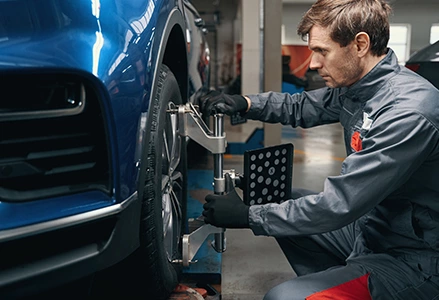
The beauty of a wheel alignment is that it’s an incredibly simple job, but it still matters who touches your suspension, so look for shops with proven certifications and proper equipment.
Camber, toe, and caster
The alignment specialist will adjust the camber (inward or outward tilt of the tires), toe (inward or outward turn of the tires), and caster (steering axis of the vehicle) to ensure everything is just right.
What You’ll Notice After an Alignment
Once you have your wheels aligned, you’ll notice a HUGE difference in your steering, and if you want a quick next step, you can schedule an appointment to get it checked before uneven wear turns into a bigger issue. The car will drive straight without pulling to either the left or right, and there will be no vibration of your steering wheel.
Conclusion. Safer steering and longer-lasting tires
Your tires will last longer thanks to the vehicle alignment, and you’ll be much safer on the road as a result!