
OEM vs Aftermarket Parts After an Accident: What to Consider
After an accident, the cheapest replacement part on the estimate is not always the smartest one for the repair. The real question is whether that specific part helps restore the vehicle properly — especially when fit, safety, calibration, or value are at stake.
9 min read

Why this decision matters right after a collision
A lot of drivers discover the OEM‑versus‑aftermarket issue only after they receive an estimate. By then, they may already be juggling insurance paperwork, transportation problems, hidden damage concerns, and pressure to approve repairs quickly. That is why parts choice deserves more attention than it usually gets.
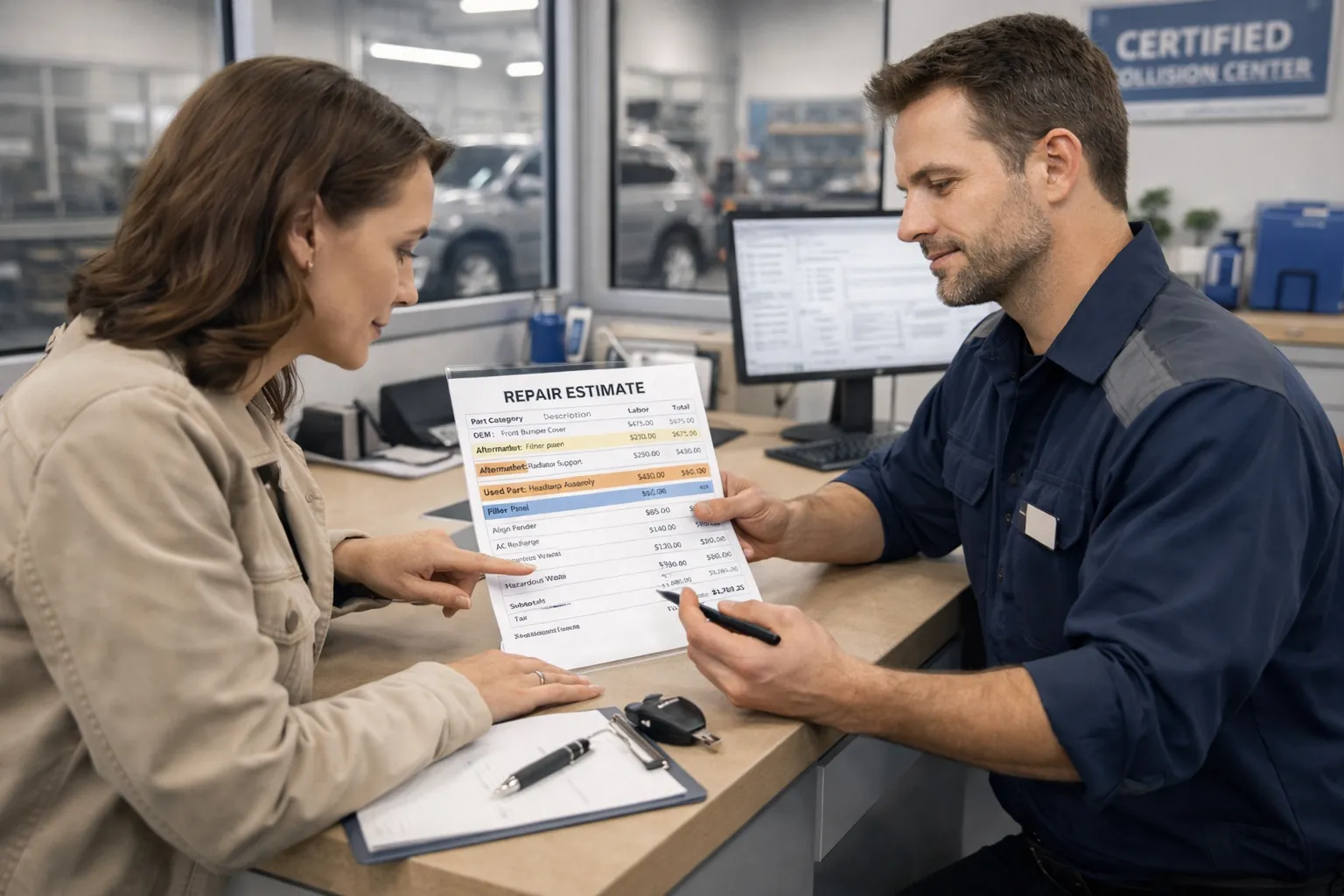
A repair estimate is not just a price tag. It is a blueprint for how the vehicle will be restored. The part type listed on that estimate can influence fit, finish, repair consistency, safety‑system interaction, and even how confident you feel about the vehicle months later.
Network Auto Body’s live services positioning emphasizes OEM parts, factory‑approved repair methods, and restoring vehicles both visually and structurally. That makes the topic a natural fit for the brand as well as for the customer journey.
Quick answer
OEM parts are made by or for the original vehicle manufacturer. Aftermarket parts are made by third‑party companies. OEM parts usually offer the closest match to factory specifications, while aftermarket parts can cost less but may vary more in fit and consistency. After a collision, the best decision depends on the exact part being replaced, the role that part plays in the repair, and whether the shop is following manufacturer repair procedures.
Decision matrix
OEM: Closest match to factory shape, mounting points.
Aftermarket: Quality can vary; may require extra adjustment.
OEM: Best baseline for sensors, calibration.
Aftermarket: Acceptable in lower‑risk areas, but ADAS parts need caution.
OEM: Higher upfront.
Aftermarket: Usually lower upfront cost.
OEM: Strongest for factory‑level quality.
Aftermarket: Can work if quality is verified.
What OEM and aftermarket parts actually mean
OEM stands for Original Equipment Manufacturer. In practical terms, OEM parts are intended to match the original design for a specific make and model. Aftermarket parts are new replacement parts made by third‑party companies outside the automaker’s own supply chain.
- OEM parts: original manufacturer parts designed for the vehicle.
- Aftermarket parts: third‑party replacement parts made outside the automaker’s supply chain.
- Used or recycled parts: previously installed original parts sourced from another vehicle.
Why the choice matters more after an accident
When OEM parts are usually worth prioritizing
- Late‑model or high‑value vehicle
- Affects safety systems or calibration
- Requires exact fit and alignment
- Owner wants factory match
- Long‑term value matters
When aftermarket parts may be reasonable
Aftermarket parts are not automatically unacceptable. For older vehicles or cost‑sensitive repairs they can be a practical option. The key is transparency and understanding the tradeoff.
Questions to ask your body shop and insurer before approving parts
- What type of parts are listed on this estimate? Identify each line item clearly as OEM, aftermarket, or used.
- Which of these parts affect safety, fit, or calibration? Separate cosmetic swaps from higher‑risk decisions.
- Are you following manufacturer repair procedures for this vehicle? A trustworthy shop should repair to manufacturer procedures.
- If an aftermarket part is being used, why is it being used here? Specific justification, not generic.
- If I switch this line item to OEM, what changes in the estimate? Compare the actual difference in writing.
- Will you discuss alternatives before installing non‑OEM parts? Transparency before any lower‑cost substitute is installed.
✅ Quick estimate‑review checklist
- What parts are OEM and what parts are not?
- Which line items matter most for safety or calibration?
- Is the recommendation based on repair quality or just cost?
- Has the shop explained the tradeoff clearly?
- Would you still feel comfortable with the same choice six months later?
Red Flags to Watch For
- Estimates that do not specify whether parts are OEM, aftermarket, or used.
- Shops that cannot explain why a non‑OEM part is being recommended.
- Shops that refuse to follow manufacturer repair procedures.
- Pressure to approve repairs before the line items have been reviewed with you.
Common mistakes drivers make with repair estimates
Focusing only on the bottom line, assuming all cosmetic parts are low‑risk, approving without understanding preliminary estimates, treating OEM vs aftermarket as emotional debate.
Final takeaway
The OEM‑versus‑aftermarket decision is about repair quality. If the part affects safety, calibration, alignment, or final finish, OEM is usually worth it. Otherwise, an aftermarket option may be reasonable if clearly explained.
Frequently Asked Questions
Request a Line‑by‑Line Estimate Audit
Bring your estimate to Network Auto Body in Oxnard for a professional part‑type review.