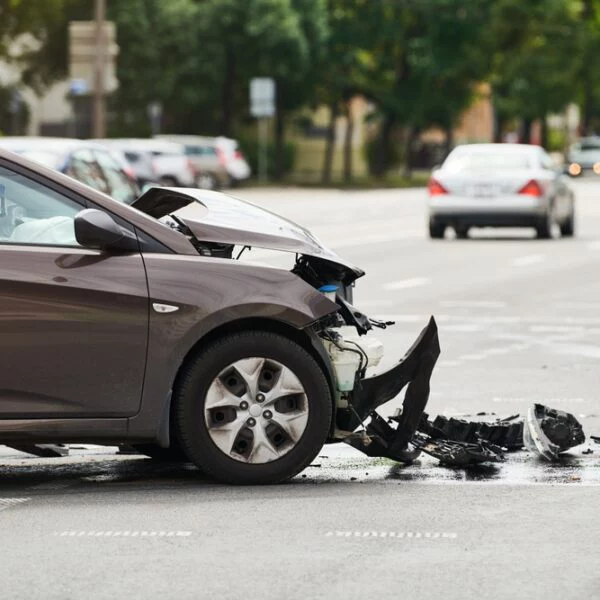

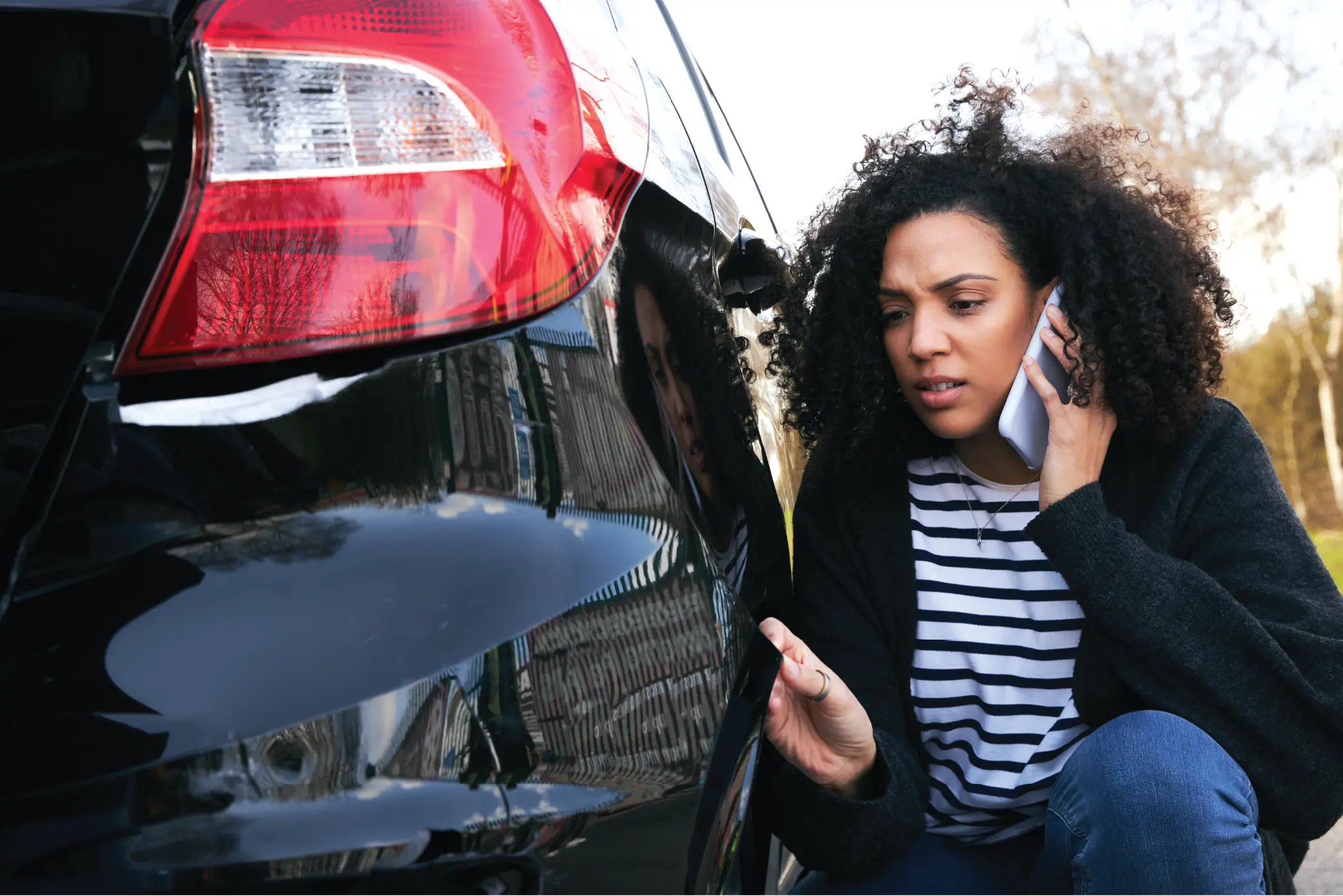
A low-speed bump in a parking lot or a small rear-end collision may leave your vehicle with little more than a scratched or dented bumper. On many newer vehicles, however, that bumper may also contain parking sensors, radar units, wiring, brackets, and other components connected to driver-assistance systems.
Because of that, parking sensor damage after an accident may not be obvious when you first look at the vehicle. Cameras and radar equipment can also be affected even when the surrounding body panels appear relatively intact.
If your vehicle has modern driver-assistance technology, a collision repair inspection may need to look beyond visible dents and scratches.
How Can a Minor Accident Damage Parking Sensors?
Parking sensors are commonly installed in the front and rear bumpers. These small ultrasonic sensors help detect objects near your vehicle when parking or maneuvering at low speeds.
Because of where they are located, they can be directly affected by even a relatively small bumper impact.
Parking sensor damage after an accident may involve:
- A cracked or damaged sensor
- A sensor pushed out of position
- A damaged mounting bracket
- Loose or damaged wiring
- Broken electrical connectors
- Damage to the bumper cover surrounding the sensor
The sensor itself may still look normal from outside the vehicle. The problem may be behind the bumper.
A bumper cover can flex during an impact and move back toward its original shape afterward. A bracket, wiring connection, or sensor behind it may not return to the same position.
What Are the Signs of Parking Sensor Damage After an Accident?
Sometimes the first indication of a problem appears when you put the vehicle in reverse or approach an object.
Possible signs include:
- Parking sensors that beep continuously
- Sensors that do not activate at all
- Warnings when no object is nearby
- Failure to detect an object that should be recognized
- A parking-assistance warning on the dashboard
- A message stating that a driver-assistance feature is unavailable
- Intermittent warnings that appear and disappear
Some collision-related problems require diagnostic testing, physical inspection, calibration, or functional testing to identify. Modern vehicles may store diagnostic trouble codes involving parking assistance, cameras, radar sensors, braking, and other electronic systems following a collision.
Can a Minor Accident Affect a Backup Camera?
Yes. Cameras are now positioned throughout many vehicles.
Depending on the model, cameras may be mounted in or around the:
- Rear liftgate or trunk
- Front grille
- Windshield
- Side mirrors
- Bumpers or body panels
A rear impact, for example, could affect a backup camera mounted near the trunk handle or liftgate even if the camera lens itself was never directly struck.
Damage may involve the camera, wiring, electrical connections, mounting hardware, or the panel holding the camera.
You may notice that:
- The image does not appear
- The image looks distorted
- The camera angle appears different
- Parking guidelines seem out of position
- One portion of a surround-view system stops working
- A warning message appears
A camera can also continue producing an image while no longer being positioned exactly where the vehicle manufacturer intends.
What About Radar Sensors?
Radar sensors deserve particular attention after a collision because many are positioned close to common impact areas.
Depending on the vehicle, radar units may be located behind:
- Front bumpers
- Rear bumpers
- Grilles
- Manufacturer emblems
- Corner sections of the vehicle
Radar may support features such as adaptive cruise control, forward collision warning, automatic emergency braking, rear cross-traffic warning, or blind-spot monitoring.
NHTSA explains that modern driver-assistance technologies use equipment including radar and cameras to detect vehicles, pedestrians, and other objects around the vehicle.
An impact does not necessarily have to destroy a radar unit to create a problem. If the sensor or its mounting location moves, its position may need to be checked as part of the repair.
Why Electronic Damage Can Be Easy to Miss
Traditional collision damage is often easy to recognize. You can see a dented fender, cracked bumper, broken light, or scraped paint. Electronic damage can be different.
Many components sit behind exterior panels. You may not be able to see:
- A broken sensor bracket
- Damaged wiring
- A loose connector
- A shifted radar unit
- Damage behind the bumper reinforcement
- A sensor that is no longer positioned correctly
This is one reason a visual inspection of the exterior does not always tell the whole story.
During collision repair, removing damaged exterior panels can reveal additional damage to brackets, wiring, sensors, retainers, and other components that were hidden during the initial inspection.
Can Bumper Repair Affect Parking Sensors?
Yes. The bumper itself is part of the equation.
Parking sensors and other electronic components are often attached to or positioned behind the bumper cover. Repairing or replacing that cover may require sensors and wiring to be removed and reinstalled.
The technician may need to check:
- Sensor mounting locations
- Sensor brackets
- Wiring connections
- Replacement bumper compatibility
- Components behind the bumper
- Manufacturer repair instructions
Some vehicles also have radar equipment positioned behind a bumper, grille, or emblem.
Correct installation becomes particularly important when a component depends on a specific mounting location or angle to operate as designed.
Does a Minor Accident Mean Your Vehicle Needs ADAS Calibration?
Not automatically.
Whether ADAS calibration is required depends on the vehicle, the damaged area, the systems installed, and the repairs performed.
ADAS stands for Advanced Driver Assistance Systems. These systems may use cameras, radar, ultrasonic sensors, and other equipment to monitor the area around your vehicle.
ADAS calibration may be required when certain components are replaced, removed, repositioned, or affected during collision repairs.
Examples can include:
- Replacing or repositioning a camera
- Replacing a radar sensor
- Repairing a sensor mounting location
- Replacing certain bumpers or grilles
- Replacing a windshield containing a forward-facing camera
- Performing repairs that affect sensor alignment
The correct procedure should be determined using vehicle-specific manufacturer repair information rather than assuming every accident requires the same steps.
Our repair process uses OEM repair procedures to determine when scanning, programming, calibration, and other electronic operations apply to a particular vehicle and repair.
What Is the Difference Between Repairing a Sensor and Calibrating It?
Repair and calibration solve different problems.
If a parking sensor, camera, radar unit, bracket, or wiring connection is physically damaged, the affected component may need repair or replacement.
Calibration involves setting or verifying certain systems so that they operate according to the vehicle manufacturer’s required parameters.
For example, replacing a damaged radar unit addresses the damaged part. The manufacturer may then require calibration to establish or verify how that radar system is positioned and operating.
A diagnostic scan serves another purpose. It communicates with the vehicle’s electronic systems to identify stored faults and other information technicians may need during the repair.
Depending on the vehicle and repair, several of these procedures may be necessary.
How Does a Collision Repair Shop Check These Systems?
Modern collision repair combines physical damage inspection with electronic diagnosis.
The process may include:
Pre-Repair Diagnostic Scanning
A pre-repair scan can identify diagnostic trouble codes stored by the vehicle’s electronic systems.
These codes may point technicians toward systems that require further inspection.
Physical Inspection
Technicians inspect the affected area, including components that may not be visible until the vehicle is partially disassembled.
That can include:
- Sensors
- Cameras
- Radar units
- Mounting brackets
- Wiring
- Connectors
- Bumper components
Manufacturer Repair Procedure Review
Repair requirements vary by manufacturer, model, equipment package, and repair operation.
Technicians can use vehicle-specific OEM information to determine what procedures apply.
Repair or Replacement
Damaged components are repaired or replaced according to the repair plan and applicable manufacturer procedures.
ADAS Calibration
When required, cameras, radar, or other driver-assistance equipment undergo the appropriate calibration procedure.
Post-Repair Scanning and System Checks
A post-repair diagnostic scan provides another check of the vehicle’s electronic systems after repairs.
A clean scan alone may not complete every required verification. Depending on the vehicle, the repair process can also involve calibration, initialization, functional testing, measurements, wheel alignment, or road testing.
Can You Keep Driving If the Sensors Seem to Work?
Do not use normal sensor operation as your only indication that collision damage is limited to the exterior.
If your vehicle was struck near a bumper, grille, mirror, windshield, or another area containing driver-assistance equipment, tell the collision repair facility exactly where the impact occurred.
You should also mention anything unusual you notice afterward, including:
- New warning messages
- Different parking sensor behavior
- Camera problems
- Blind-spot alerts that behave differently
- Driver-assistance features becoming unavailable
Driver-assistance technology is designed to support attentive driving, not replace it.
Does Insurance Cover Parking Sensor, Camera, or Radar Damage?
Coverage depends on your insurance policy, the circumstances of the accident, and the claim.
When electronic components were damaged in a covered collision, the repair estimate may include the diagnostic work, parts, labor, calibration, programming, and related procedures required for the repair.
Some damage also becomes clearer after disassembly.
If additional accident-related damage is discovered during repairs, the collision repair facility can document the findings and communicate with the insurance company as appropriate.
The important point is that the repair estimate should account for the vehicle as it is actually equipped. A modern bumper may be more than an exterior panel. It can be part of a larger network of sensors, wiring, brackets, and electronic systems.
Have Your Vehicle Checked After a Minor Collision
A small dent or scrape does not necessarily mean your parking sensors, cameras, or radar were damaged. But the exterior alone may not show what happened to the components mounted behind the bumper, grille, windshield, or mirrors.
If your vehicle was involved in a collision, Network Auto Body can inspect the damaged area, identify the systems involved, review manufacturer repair procedures, and determine what diagnostic, repair, or calibration work may be required.
Make Sure Your Vehicle Is Fully Checked After a Collision
Network Auto Body provides collision repair, diagnostic scanning, ADAS calibration, and insurance claim assistance for Southern California drivers.