
Quick Summary
Bringing the documents that apply to your situation can make your estimate or repair appointment much easier.
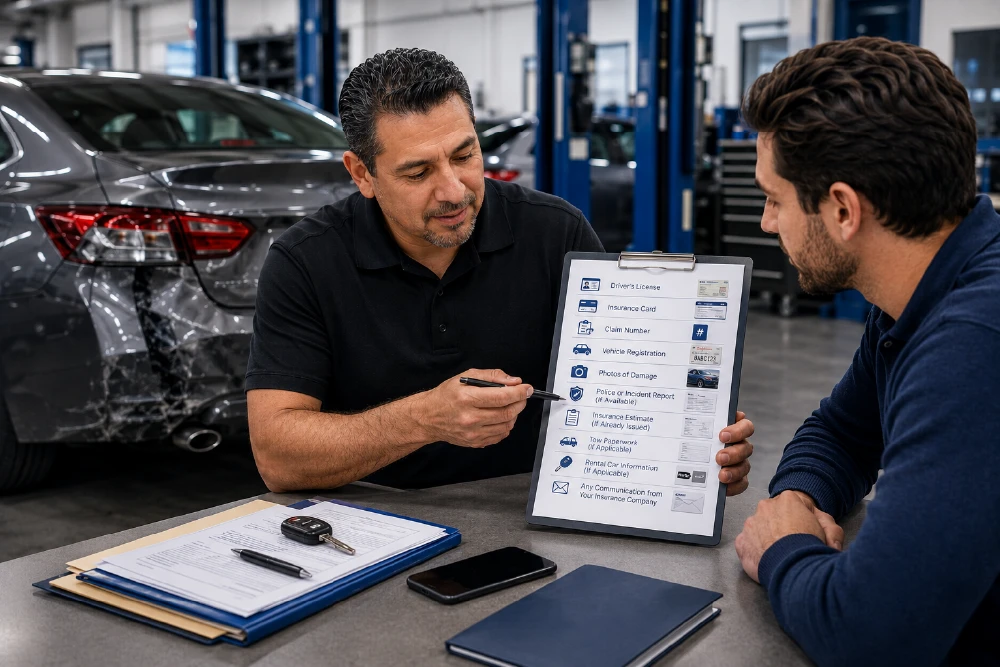
If you have them, bring your driver’s license, insurance card, claim number, vehicle registration, photos of the damage, accident details, prior estimates, tow paperwork, and any communication from your insurance company. If you are paying out of pocket, bring vehicle information, photos, and any prior repair notes or estimates.
For drivers across Los Angeles, the goal is simple: help the repair team identify your vehicle, understand the damage, review insurance or customer-pay details, and explain the next step clearly.
Network Auto Body has served local drivers for more than 41 years, and the best auto body repair experience starts with organized information. The more clearly the shop understands your vehicle and accident situation, the easier it is to guide you through the estimate process.
1. The Short Answer: What to Bring to a Body Shop
The most helpful documents to bring to a body shop are the ones that identify you, identify the vehicle, explain the accident, and clarify whether insurance is involved.
Here is the simple checklist.
| Bring This If Available | Why It Helps |
| Driver’s license | Confirms your identity for appointment, authorization, and communication |
| Insurance card | Helps the shop identify your carrier if insurance is involved |
| Claim number | Connects the repair visit to an existing insurance claim |
| Adjuster contact information | Helps with supplement or estimate communication if needed |
| Vehicle registration | Confirms vehicle details such as VIN, plate, year, make, and model |
| Photos of damage | Helps document visible damage and accident condition |
| Police report or incident report, if available | May help support claim context if one was filed |
| Insurance estimate, if already issued | Gives the shop a starting point for review |
| Prior body shop estimate, if any | Helps compare repair scope and line items |
| Tow paperwork | Helps document how the vehicle arrived or where it was stored |
| Rental car information, if applicable | Helps clarify timing and claim coordination |
| Lienholder or lease information, if relevant | May matter for authorization or claim communication in some cases |
Each customer can bring the items available for their situation.
If you only have your vehicle, insurance information, and basic accident details, the shop can often still start the conversation. The checklist simply helps reduce back-and-forth.
Documents Are Helpful, but the Vehicle Matters Most
Documents support the process, and the vehicle inspection completes the review.
A claim number can help connect the paperwork. Photos can show visible damage. An insurance estimate can provide a starting point. But the body shop still needs to inspect the vehicle, especially if hidden damage may be present.
This is why the article should welcome readers to begin with the information they have. A practical body shop checklist should create confidence and make the first visit easier.
Bring Originals, Copies, or Digital Versions When Appropriate
In many cases, a photo or digital copy may be enough to begin. For example, you may have your insurance card on your phone, a claim number in an email, or accident photos in your camera roll.
The safest approach is to bring what you have and ask the shop what else may be needed after the first review.
2. Insurance Information and Claim Documents
If insurance is involved, your insurance information is usually the most helpful paperwork to bring.
A body shop may need to know whether a claim has already been opened, which insurance company is involved, whether an adjuster has inspected the vehicle, and whether an estimate has already been written.
The body shop uses this information to understand the repair path, while the insurer determines coverage.
Insurance Card
Your insurance card helps identify your carrier and policy information. A digital version may be enough to begin when the physical card is elsewhere.
Bring your insurance card if:
- You are filing a claim
- A claim has already been opened
- You are deciding whether the repair will be insurance-paid or customer-paid
- The shop may need to communicate with your insurer later
Claim Number
If you already have a claim number, bring it.
The claim number is one of the most useful pieces of information because it connects your vehicle damage to the insurance file and helps communication move faster.
You may find the claim number in:
- An email from the insurance company
- A text message from the insurer
- The insurer’s mobile app
- A phone call note from the adjuster
- A printed claim document
If your claim number is still pending, the shop can usually tell you what information to gather next.
Adjuster Contact Information
If an adjuster has already been assigned, bring their name, phone number, email, or claim contact details.
This can help if the shop needs to send documentation, photos, a supplement, or updated repair information later.
Insurance Estimate
If your insurance company has already written an estimate, bring it to the appointment.
An insurance estimate can help the shop understand what has already been reviewed. It may include visible damage, initial repair line items, parts, labor, and claim notes.
Customers should understand that the insurance estimate may show the initial repair scope, while a full inspection or disassembly can reveal hidden damage, supplements, parts changes, diagnostics, and refinish needs for later documentation.
Deductible Information
Your deductible is usually set by your insurance policy. If you know it, bring that information or be ready to confirm it.
A deductible is the portion of the claim you may be responsible for under your policy, separate from a body shop fee.
Ask your insurer to confirm the deductible and ask the shop how it may appear in the repair paperwork.
Insurance Language Should Stay Practical
This article should keep insurance language practical. Coverage depends on the claim, policy, insurer review, documentation, and repair circumstances.
The safer guidance is:
Bring any insurance information you have. The shop can use it to understand the repair path, but your insurer determines claim coverage and approval.
3. Vehicle Documents and Ownership Information
Vehicle documents help the body shop confirm exactly which vehicle is being inspected and repaired.
That may sound simple, but it matters. The correct year, make, model, trim, VIN, and options can affect parts, procedures, sensors, repair planning, and documentation.
Network Auto Body works across foreign and domestic manufacturers, so accurate vehicle information helps the repair team connect the estimate to the right vehicle-specific details.
Vehicle Registration
Your registration is one of the easiest ways to confirm vehicle identity.
It can help verify:
- VIN
- License plate
- Year
- Make
- Model
- Registered owner
- State information
A digital photo of the registration may help when the physical copy is elsewhere. The shop can also usually inspect the VIN directly on the vehicle, and having registration can make the intake process smoother.
Driver’s License
Your driver’s license helps confirm identity and contact information. It may also be used for repair authorization, estimate paperwork, or communication setup depending on the shop’s process.
Bring your driver’s license or another accepted form of identification.
Vehicle Title, Lienholder, or Lease Information
A vehicle title is usually relevant in specific situations. Ownership or lienholder information may matter especially if:
- The vehicle is leased
- The vehicle is financed
- A total loss decision is possible
- The insurer requests ownership verification
- Repair authorization requires additional documentation
If ownership information becomes relevant, the shop or insurer can explain what is needed.
Vehicle Manual or Service Records
The most useful records for a body shop estimate are the ones directly related to the damaged area.
However, prior repair records can be helpful if the damaged area was repaired before. Previous paint work, prior collision repairs, or existing damage can affect the estimate and repair planning.
Bring prior repair records if they are directly relevant to the damaged area.
Why Vehicle Information Matters for Modern Repairs
Modern vehicles can have different sensors, cameras, radar systems, trims, materials, and repair procedures even within the same model line.
For example, two vehicles may look similar from the outside, but one may have parking sensors, blind spot monitoring, radar brackets, special trim, or different bumper components.
Accurate vehicle information creates clarity during estimate writing, parts research, and repair planning.
For a dealer-driven and manufacturer-aligned repair process, the right vehicle details matter from the beginning.
4. Accident Photos, Damage Notes, and Police Report If Available
Photos and accident notes can be extremely helpful, especially if the vehicle has already been moved, the accident scene has changed, or images can describe the damage more clearly than words.
Clear, useful images and basic information are enough to help the repair team understand what happened.
Damage Photos
If you took photos after the accident, bring them to the body shop or keep them ready on your phone.
Helpful photos may include:
- Full-vehicle photos from several angles
- Close-up photos of visible damage
- Photos showing bumper, panel, light, mirror, wheel, or trim damage
- Photos of panel gaps or areas that look shifted
- Photos of dashboard warning lights
- Photos of leaking fluids, if present
- Photos showing where the impact occurred
- Photos of the other vehicle’s impact area, if available and appropriate
Photos are especially useful if the damage looked different at the scene than it does later. For example, a loose bumper may have been pushed back into place, or debris may have been removed before the estimate appointment.
A photo can preserve context.
Accident Notes
Accident notes can be simple. A short written or typed note can help.
Useful details may include:
- Date and approximate time of the accident
- Location of the accident
- Direction of impact
- Whether the vehicle was parked or moving
- Whether the vehicle was hit in the front, rear, side, or corner
- Whether the vehicle was towed
- Whether warning lights appeared afterward
- Whether the car drives differently now
- Whether doors, hood, trunk, or liftgate close differently
This information can help the estimator understand whether hidden damage may be possible.
For example, if the vehicle was rear-ended and the trunk closes differently, that is important. If the front bumper damage is near parking sensors or radar areas, that matters too. If the vehicle pulls to one side after impact, the shop may need to consider whether additional inspection is needed.
Police Report or Incident Report
If a police report or incident report was filed, bring a copy if you have it.
A police report can help with insurance documentation or accident context when one was filed.
You can usually begin the estimate conversation with the information you already have while a report is pending, unless your insurer or situation specifically requires it first.
Photos Support a Complete Inspection
Photos provide useful visible context, while an inspection can reveal additional details.
A bumper may hide reinforcement damage. A panel may hide broken clips or inner structure. A light may look intact while mounting tabs are cracked behind it. A sensor area may need closer inspection.
That is why Network Auto Body’s estimate process should focus on both the vehicle and the paperwork. The documents help tell the story, and the inspection helps confirm the repair needs.
5. Prior Estimates, Tow Paperwork, and Rental Information
If you already have documents from another part of the accident process, bring them. They may help the body shop understand what has already happened and what still needs to be reviewed.
These documents can add clarity whenever they are available.
Prior Body Shop Estimates
If another shop already wrote an estimate, bring it.
A prior estimate can help the repair team understand what another facility saw, what parts or labor were listed, and whether there are differences in repair scope.
The new shop will prepare its own estimate. Different estimates may vary because of:
- Inspection depth
- Photo vs. in-person review
- Hidden damage concerns
- Parts availability
- Repair method
- Paint and refinish planning
- Insurance review
- Supplement documentation
A prior estimate can be a useful comparison point, but the repair plan should still be based on the vehicle’s actual condition.
Insurance Estimate
If your insurance company has already issued an estimate, bring that as well.
The body shop can review what the insurer included and identify whether anything may need additional inspection or documentation. If hidden damage is found later, a supplement may be needed.
This is a normal part of collision repair. An insurance estimate may be based on visible damage, photos, or an initial inspection. Disassembly can reveal additional damage for documentation.
Tow Paperwork
Tow paperwork can be helpful if the vehicle was moved after the accident.
It may show:
- Where the vehicle was picked up
- Where it was delivered
- Date and time of towing
- Storage yard or tow company details
- Tow invoice or reference number
- Vehicle condition notes, if included
When the vehicle is currently at another location, tow information can help coordinate next steps.
Rental Car Information
If you already have a rental car, bring or save the rental information. If insurance is involved, rental coverage may depend on the policy and claim details.
Helpful rental information may include:
- Rental company name
- Reservation number
- Claim-related rental notes
- Insurance communication about rental coverage
- Rental start date
- Expected return timing, if available
The insurer determines rental coverage, while knowing whether you are in a rental can help the body shop with communication and timing expectations.
Communication From Your Insurer
Bring any relevant emails, app messages, text messages, or letters from your insurance company.
These may include:
- Claim confirmation
- Adjuster assignment
- Inspection notes
- Estimate approval or review status
- Payment notes
- Supplement instructions
- Rental information
- Repair facility instructions
In many cases, showing the message on your phone is enough to help the shop understand what the insurer has already communicated.
Why These Documents Help
Prior estimates, tow paperwork, rental information, and insurer messages help create a clearer timeline.
After an accident, details may be distributed across phone calls, texts, emails, apps, tow receipts, and insurance portals. Bringing what you have helps the repair advisor put the pieces together.
For Network Auto Body customers, that organization supports the larger goal: a smoother estimate and repair process with more efficient coordination.
6. What to Bring If You Are Paying Out of Pocket
Some repairs are customer-paid, especially smaller repairs, cosmetic damage, or situations where the customer is still deciding whether to file a claim.
If you are paying out of pocket, focus on bringing information that helps the shop understand the vehicle and damage.
Basic Information to Bring
For customer-pay repairs, bring:
- Driver’s license or ID
- Vehicle registration, if available
- Vehicle year, make, model, and trim
- VIN, if available
- Photos of the damage
- Notes about how the damage happened
- Any prior repair estimates
- Any prior repair history for the damaged area
- Preferred contact information
The shop may be able to inspect the VIN directly from the vehicle, but having registration or vehicle information ready can speed up intake.
Prior Damage and Repair History
If the damaged area has been repaired before, mention it.
Previous repairs, paint work, prior dents, existing scratches, or older damage can affect the estimate. This is especially true for paint matching, refinishing, panel repair, or blending.
Share the details you know clearly.
For example:
- “This bumper was repaired last year.”
- “The door had a small dent before this accident.”
- “The quarter panel was painted before I bought the car.”
- “The sensor warning light came on after this impact.”
- These details help the shop create a more accurate repair plan.
Budget Expectations
It is okay to tell the shop that you are paying out of pocket and want to understand the repair options. The article should connect each option to safety, fit, finish, function, and repair quality.
A body shop can explain options when appropriate, but the repair still needs to account for safety, fit, finish, function, and manufacturer-aligned repair planning.
The appropriate repair approach depends on the damage and the condition of the part, and some situations may offer multiple repair options.
The important thing is to have a clear conversation.
Why an Inspection Still Matters
Customer-pay vehicles also benefit from a proper inspection.
Hidden damage can exist in both insurance and customer-pay repairs. A bumper, panel, lamp, bracket, sensor, or structural area can conceal damage behind the visible surface.
For customer-pay repairs, documentation is still valuable. It helps you understand what is being repaired, what is being replaced, what is being refinished, and whether the estimate may change after closer inspection.
Warranty-Backed Repairs and Customer-Pay Work
If the repair qualifies under Network Auto Body’s Lifetime Warranty terms, documentation still matters. The repair record should clearly show the work performed, especially for workmanship-related body, unibody, and refinish repairs.
Ask how the repair will be documented and what warranty terms apply.
7. What If Some Documents Are Still Pending?
With some documents still pending, you can usually contact the body shop or begin the estimate conversation.
This is important because many drivers appreciate guidance after an accident. They may be waiting for an insurance claim number, a police report, an adjuster callback, or towing details. In some cases, the vehicle is already damaged and the customer needs guidance while the paperwork is being completed.
You can begin the next steps while one item is still pending.
Bring What You Have
The best approach is simple: bring what you have and explain what is still pending.
For example:
- “I have my insurance card, and my claim number is still pending.”
- “I filed a claim, and I am waiting for the adjuster to contact me.”
- “The police report is still being prepared.”
- “The tow company has the vehicle, but I have the tow receipt.”
- “I have photos from the accident scene, and the insurance estimate is still pending.”
A repair advisor can usually tell you what information is needed next.
The Body Shop Can Help You Understand the Next Step
The insurance company manages its process, and the body shop can help you understand what is needed for the estimate or repair appointment.
Depending on your situation, the next step may be:
- Starting with a visual inspection
- Submitting an online estimate request
- Scheduling an in-person estimate
- Waiting for the claim number
- Having the vehicle towed to the shop
- Reviewing an insurance estimate
- Documenting visible damage
- Explaining whether teardown may be needed later
Network Auto Body’s roadmap positions this type of content as part of the estimate-mechanics support layer, meaning the goal is to reduce friction and help customers move into the right estimate process.
Confirm Important Claim Details
When insurance details need confirmation, bring what you know and clarify the rest later.
For example, when your deductible, coverage, or claim status needs confirmation, say, “I will confirm that with my insurer” to keep the information accurate.
Accurate claim details support smoother coordination later.
Share Safety-Related Questions Right Away
If your vehicle has warning lights, steering changes, leaking fluids, loose panels, sensor issues, or doors that close differently, mention that right away while the remaining paperwork is gathered.
The vehicle condition matters.
Paperwork helps organize the process. The vehicle symptoms help guide the repair conversation.
8. Digital Documents: What You Can Show on Your Phone
Digital versions of many documents can help start the process.
This is useful because insurance companies, tow companies, rental providers, and repair shops often communicate by email, app, text, or online portal. After an accident, your most important information may already be on your phone.
Helpful Digital Documents
You may be able to show:
- Digital insurance card
- Claim number email or text
- Adjuster contact information
- Insurance app claim screen
- Photos of vehicle damage
- Photos from the accident scene
- PDF insurance estimate
- Tow receipt
- Rental reservation
- Repair appointment confirmation
- Prior estimate PDF
- Vehicle registration photo, if available
A digital version may be enough to begin intake or help the repair advisor understand your situation.
Keep Sensitive Information Secure
Share private accident documents through approved, secure channels.
Share the information needed for intake or claim communication directly with the body shop.
For example, keep the following information private:
- Full VIN photos
- Driver’s license images
- Insurance policy documents
- Claim documents with personal details
- License plate information in public posts
- Photos showing private addresses or unrelated people
Bring the information directly to the shop or use the shop’s approved submission process.
Organize Your Phone Before the Appointment
Before you arrive, it can help to create a small album or folder on your phone with relevant photos and screenshots.
Include:
- Damage photos
- Claim number
- Insurance card
- Adjuster contact
- Tow receipt
- Rental information
- Prior estimate
- Any messages from the insurer
This makes the appointment smoother. Instead of scrolling through unrelated photos or emails, you can quickly show the repair advisor what matters.
Digital Is Helpful, but Inspection Still Matters
Digital documents can support the estimate process, especially when starting online. But the vehicle still needs the right level of inspection.
Photos, screenshots, and claim documents help tell the story. The vehicle itself confirms the repair needs.
9. Body Shop Appointment Checklist
Before your body shop appointment, use this checklist to organize what you have.
Bring the items that apply to your situation.
If Insurance Is Involved
Bring or save:
- Driver’s license or ID
- Insurance card
- Claim number
- Adjuster contact information
- Insurance estimate, if already issued
- Deductible information, if known
- Insurance app or portal login access, if useful
- Relevant insurer messages or emails
If You Are Paying Out of Pocket
Bring or save:
- Driver’s license or ID
- Vehicle registration, if available
- Vehicle year, make, model, and trim
- VIN, if available
- Damage photos
- Notes about how the damage happened
- Prior estimate, if any
- Prior repair history for the damaged area, if known
If the Vehicle Was Towed
Bring or save:
- Tow company name
- Tow receipt
- Storage yard information, if applicable
- Pickup and delivery location
- Tow date and reference number
- Any vehicle condition notes from the tow provider
If You Have Accident Documentation
Bring or save:
- Accident photos
- Police report or incident report, if available
- Other driver’s insurance information, if relevant and appropriate
- Notes about date, time, location, and direction of impact
- Photos of warning lights or visible vehicle symptoms
If You Already Have Estimates
Bring or save:
- Insurance estimate
- Prior body shop estimate
- Online estimate confirmation
- Supplement documents, if any
- Repair authorization forms, if already started
10. Come Prepared for Your Los Angeles Estimate
A body shop appointment is easier when you arrive with the right information. The goal is preparation.
If you have your insurance card, claim number, vehicle registration, damage photos, prior estimate, and basic accident notes, bring them. With some items still pending, bring what you have and ask what else may be needed.
For drivers across Los Angeles, this kind of preparation helps the repair team understand the vehicle and the repair path faster.
It can also help clarify whether the repair is likely to involve:
- Insurance claim communication
- Online estimate review
- In-person inspection
- Hidden damage documentation
- Supplement review
- Towing coordination
- Rental timing questions
- Customer-pay repair planning
- Manufacturer-aligned repair considerations
Network Auto Body’s 41-year local history, dealer-driven repair approach, foreign and domestic manufacturer capability, and Lifetime Warranty on qualifying repairs all make documentation important. The more clearly the repair record begins, the easier it is to explain what happens next.
This is especially true if the vehicle has modern sensors, structural concerns, paint/refinish needs, or hidden damage that may become visible during a deeper review.
A prepared appointment can save time, create clarity, and help the repair team focus on what matters most: understanding the vehicle damage and building the right repair plan.
Conclusion: Bring What You Have, and Let the Estimate Process Guide the Rest
After an accident, it is common to have questions about what to bring to a body shop. The process can involve insurance, photos, claim numbers, vehicle registration, tow details, rental questions, and repair estimates.
You can ask for help with the basic information you have while the remaining details are organized.
Start with the basics:
- Driver’s license or ID
- Insurance card, if insurance is involved
- Claim number, if available
- Vehicle registration or VIN information
- Damage photos
- Accident notes
- Insurance estimate or prior estimate, if available
- Tow or rental information, if relevant
These documents help the body shop understand your situation faster. They also help reduce back-and-forth during estimate writing, insurance communication, and repair planning.
For any pending item, explain what you have and what is still being gathered. A clear repair advisor can help you understand the next step.
| CTA Block: Schedule a Prepared Estimate Visit in Los Angeles Bring your documents, photos, and questions. Network Auto Body will help you sort through the next step. For more than 41 years, Network Auto Body has helped Los Angeles-area drivers navigate collision repair with clear communication, organized repair planning, and a dealer-driven, manufacturer-aligned approach for foreign and domestic vehicles. Backed by a Lifetime Warranty on qualifying repairs, the team helps document your vehicle’s repair needs from the first estimate through the final repair record. Schedule your estimate or in-person inspection at your nearest Network Auto Body location in Valencia, Downtown L.A., North Hollywood, Van Nuys, or Oxnard today. |
FAQ Section
1. What documents should I bring to a body shop after an accident?
Bring your driver’s license, insurance card, claim number, vehicle registration, damage photos, accident notes, and any insurance estimate or prior body shop estimate if available. Tow paperwork, rental information, and adjuster contact details can also help if they apply.
2. Do I need my insurance claim number for a body shop estimate?
A claim number is very helpful if insurance is involved because it connects your repair visit to the insurer’s claim file. While it is pending, bring your insurance card and any claim communication you have.
3. Should I bring my vehicle registration to the body shop?
Yes, if available. Registration helps confirm the vehicle’s VIN, license plate, year, make, model, and ownership details. The shop may also inspect the VIN directly from the vehicle.
4. Do I need a police report for collision repair?
A police report can help when one was filed. While the report is being prepared, you can usually begin the estimate conversation with the documents and photos you already have.
5. Can I bring an insurance estimate to a body shop?
Yes. If your insurance company already wrote an estimate, bring it. The body shop can review what was included and explain whether additional inspection, documentation, or a supplement may be needed later.
6. What photos should I bring after a car accident?
Bring full-vehicle photos, close-ups of the damage, multiple angles, dashboard warning light photos if present, and any photos showing how the vehicle looked at the accident scene. Clear photos provide useful context, and an inspection can assess possible hidden damage.
7. What should I bring if I am paying out of pocket?
For a customer-pay repair, bring your driver’s license, vehicle registration if available, vehicle details, damage photos, accident notes, prior estimates, and any prior repair history for the damaged area.
8. What if some documents are still pending?
Bring what you have and explain what is still pending. You can usually start the estimate conversation while one document is being gathered. The shop can tell you what information may be needed next.
9. Can I show documents on my phone?
In many cases, yes. Digital insurance cards, claim numbers, adjuster emails, estimate PDFs, tow receipts, rental confirmations, and damage photos can help start the process. Keep sensitive personal information secure and use the shop’s approved submission process when possible.